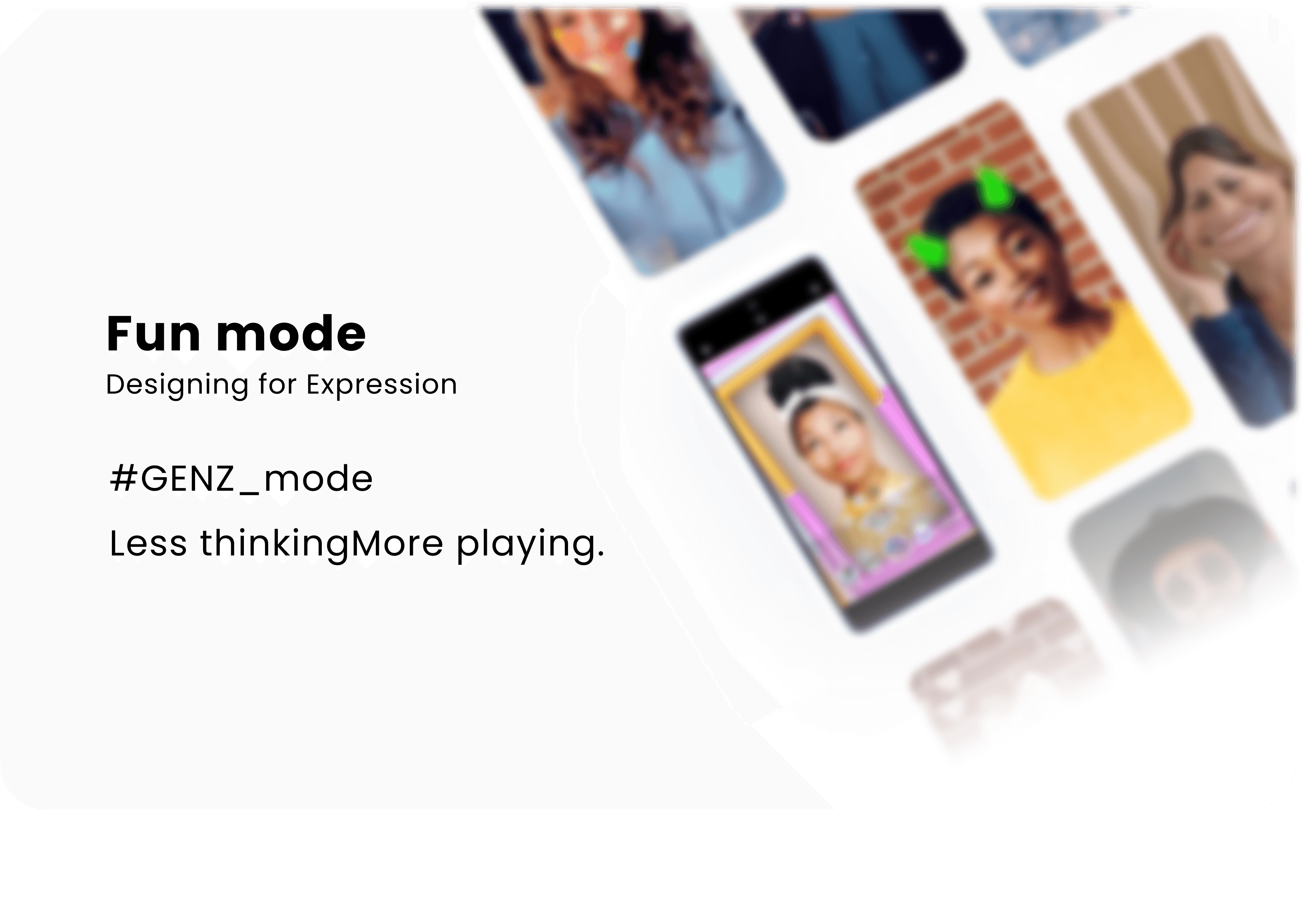
The camera was no longer just a camera.
For Gen Z, it had become a tool for expression: fast, visual, and constantly evolving. Photos weren’t just captured. They were edited, layered, shared, and turned into identity.
But Fun Mode wasn’t keeping up. It had features: filters, lenses, effects.
It had variety maybe too much of it. But it didn’t have flow. Users opened it, explored for a few seconds, and left. Not because it lacked creativity but because creativity felt like work.
The engagement gap
Gen Z doesn’t explore features. They follow momentum. They expect: Instant results, Effortless discovery, Continuous novelty. Fun Mode, however, felt static:
Too many options upfront
No clear starting point
No sense of what’s trending or worth trying
Designers saw a feature set. Users felt friction.
From tools to playground
We stopped asking:
“How do we improve features?”
And started asking:
“How do we make this feel fun again?”
The answer wasn’t more effects. It was a better experience flow. We reframed Fun Mode as a playground, not a toolkit:
Introduced structured discovery (For You, Trending, Categories)
Reduced cognitive load by grouping and prioritizing content
Enabled quick preview and instant application of effects
The goal was simple: Less thinking. More playing.
Designing for instant expression
Gen Z creates in motion. They don’t want to browse endlessly or configure settings.
They want to try, react, and move on. So we focused on speed and feedback:
Instant previews without committing
One-tap application of effects
Smooth transitions between lenses
The experience became fluid almost addictive. Not because it demanded attention, but because it rewarded curiosity.
Making discovery feel alive
Static libraries don’t work for dynamic audiences. We introduced signals of freshness and relevance:
Trending lenses surfaced in real time
Personalised suggestions based on usage
Context-aware recommendations
Fun Mode started evolving with users. Every session felt slightly different. Every interaction felt timely.
What changed
The redesign didn’t add complexity. It removed hesitation.
Post-launch impact (estimated):
+38% increase in Fun Mode engagement
+27% growth in repeat usage among Gen Z users
+22% increase in lens exploration depth
-19% drop-off during first-time use
Users stopped browsing. They started playing.
From feature to culture
Before, Fun Mode was an option. After, it became a habit. Not because it had more but because it felt right. For Gen Z, expression isn’t a task. It’s instinct. And the best design doesn’t interrupt that instinct it amplifies it.


